Running a taxi or private hire business means the phone never stops. Early morning airport runs, late-night pickups, last-minute school trips — the calls come in at all hours, and most of them need an answer right now.
The problem is that drivers can’t always pick up. If you’re the operator taking bookings yourself, you’re often on the road. If you’re running a small fleet, your office phone goes unanswered the moment everyone’s busy. And in private hire, an unanswered call almost always means a lost booking — the passenger just calls the next operator on the list.
Voicemail doesn’t fix this. Most people calling for a taxi don’t leave one — and asking them to is asking them to give up the thing that makes phone calls valuable in the first place. BIA/Kelsey research consistently finds that phone calls convert to bookings at 10–15 times the rate of web enquiry forms. A missed call isn’t a missed message. It’s a missed fare.
What taxi operators actually need from a phone answering service
A traditional answering service can take a message, but taxi bookings have specific details that matter: the pickup address, the destination, the time, the number of passengers, whether it’s a return trip. If those details aren’t captured accurately, the booking is useless.
That’s why most taxi operators have been reluctant to hand call-handling off to someone who doesn’t understand the job. The risk of getting a postcode wrong or missing an important detail is too high.
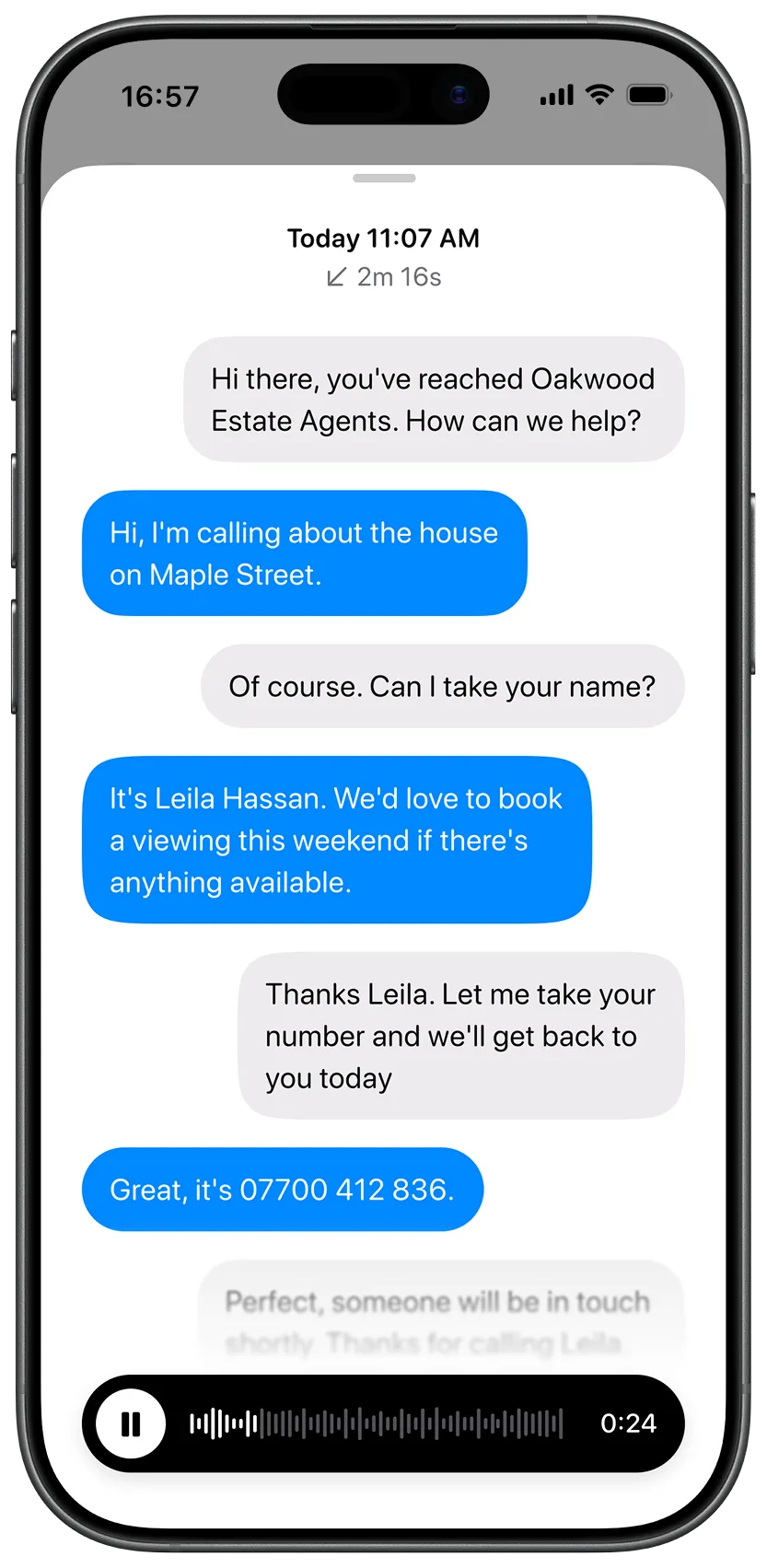
AI receptionists work differently. Rather than a human trying to take notes and relay information, the AI has a structured conversation with the caller — asking for exactly the details that matter, in the right order — and delivers a clean summary to the operator.
For taxi and private hire, that means:
- Pickup address and destination
- Date and time of the journey
- Number of passengers
- Any specific requirements (wheelchair access, child seat, larger vehicle)
- Contact number for the passenger
By the time the operator reviews the booking, everything is already there.
The 2am problem
Late-night bookings are where the gap is clearest. A stag party wrapping up at 1am, someone who’s had a few drinks and needs to get home safely, a night-shift worker who finishes at 2am — these are real jobs, and they call whoever picks up.
If your phone goes to voicemail at that hour, the booking goes elsewhere. If an AI answers, captures the details, and you wake up to a summary in the morning — or get a notification immediately if you want — you’ve kept the job.
Some operators run a WhatsApp or text booking system for late nights, but not every passenger is comfortable with that, and it requires them to already know about it. A phone number that always answers is simpler.
Running a small fleet
For operators running one to ten vehicles, the economics are straightforward. A traditional call-answering service costs hundreds of pounds a month and still requires someone to relay information to drivers. A dispatcher adds staff costs that only make sense at volume.
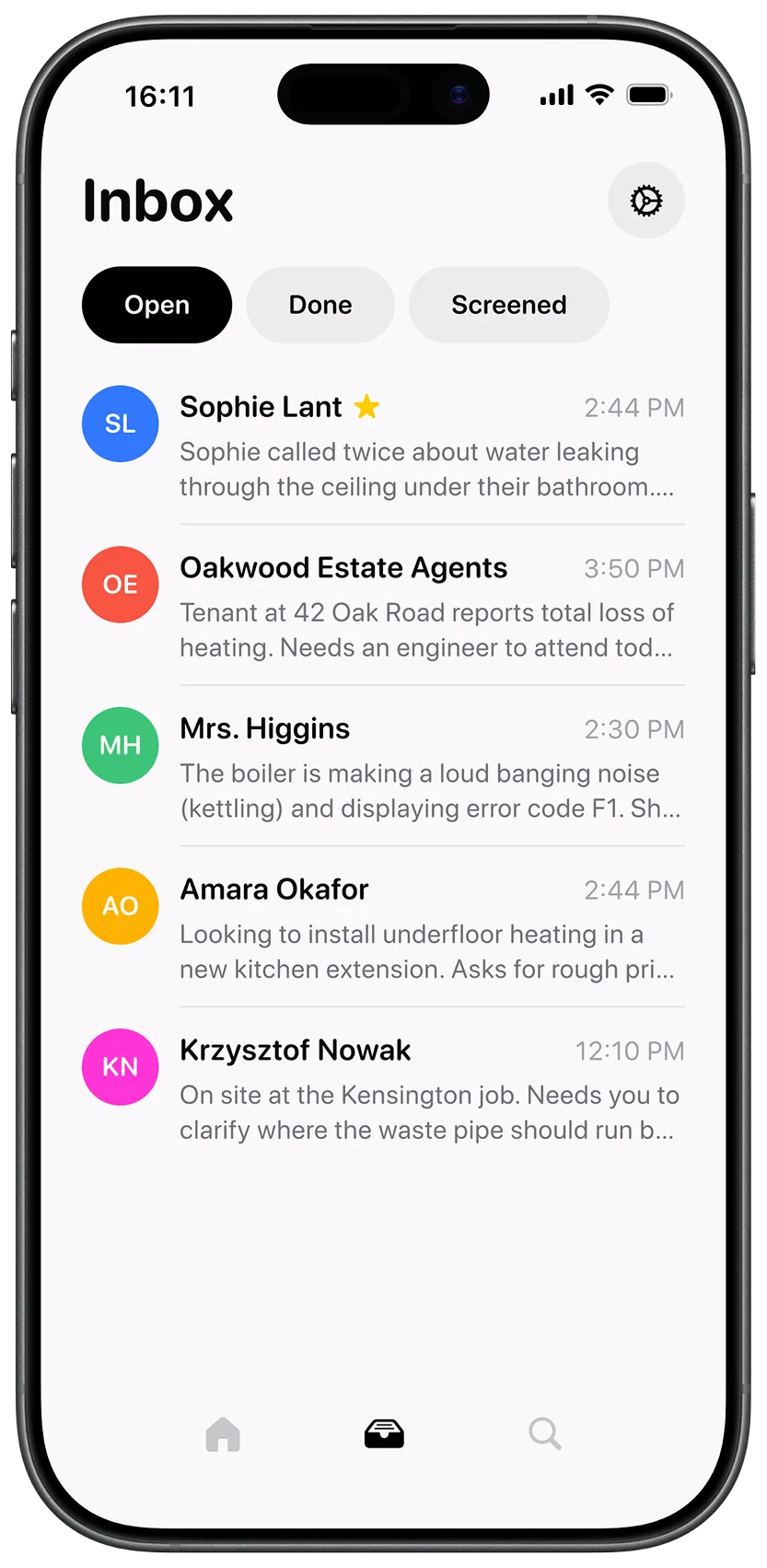
An AI receptionist answers every call, captures every booking, and sends it straight to wherever you manage your jobs — whether that’s a simple summary by text, an email, or integrated into your booking system.
There’s no handoff. No relay. No missed detail because someone was half-asleep at 2am.
What changes day to day
Operators who’ve moved to AI call handling describe a similar shift: the phone stops being something you have to be next to constantly.
Instead of carrying the business phone everywhere and panicking every time it rings while you’re driving, you check a summary of bookings. The calls are handled. The details are accurate. You decide which jobs to confirm and dispatch.
For private hire specifically — where licensing requires passenger contact details to be logged anyway — having a structured record of every booking enquiry is a side benefit that simplifies compliance.
Is it right for every operator?
Not necessarily. If you run a busy minicab office with a dedicated controller taking bookings, you don’t need this. The phone is already answered.
But if you’re a sole trader doing private hire alongside driving, or running a small fleet where the office phone is really just your mobile — an AI receptionist means you stop losing bookings to competitors who happened to pick up.
The calls don’t stop coming at inconvenient times. They just stop going to voicemail.