Mark Roberts runs a locksmith business in the East Midlands. He’s been trading for eleven years, mostly on emergency callouts — lockouts, broken locks, lost keys — plus some installation and security assessment work on the side.
When he signed up to Clara, he wasn’t sure how many calls he was missing. He had a rough sense that it was “a few a week” but he’d never actually counted. He certainly hadn’t put a number to what those calls might be worth.
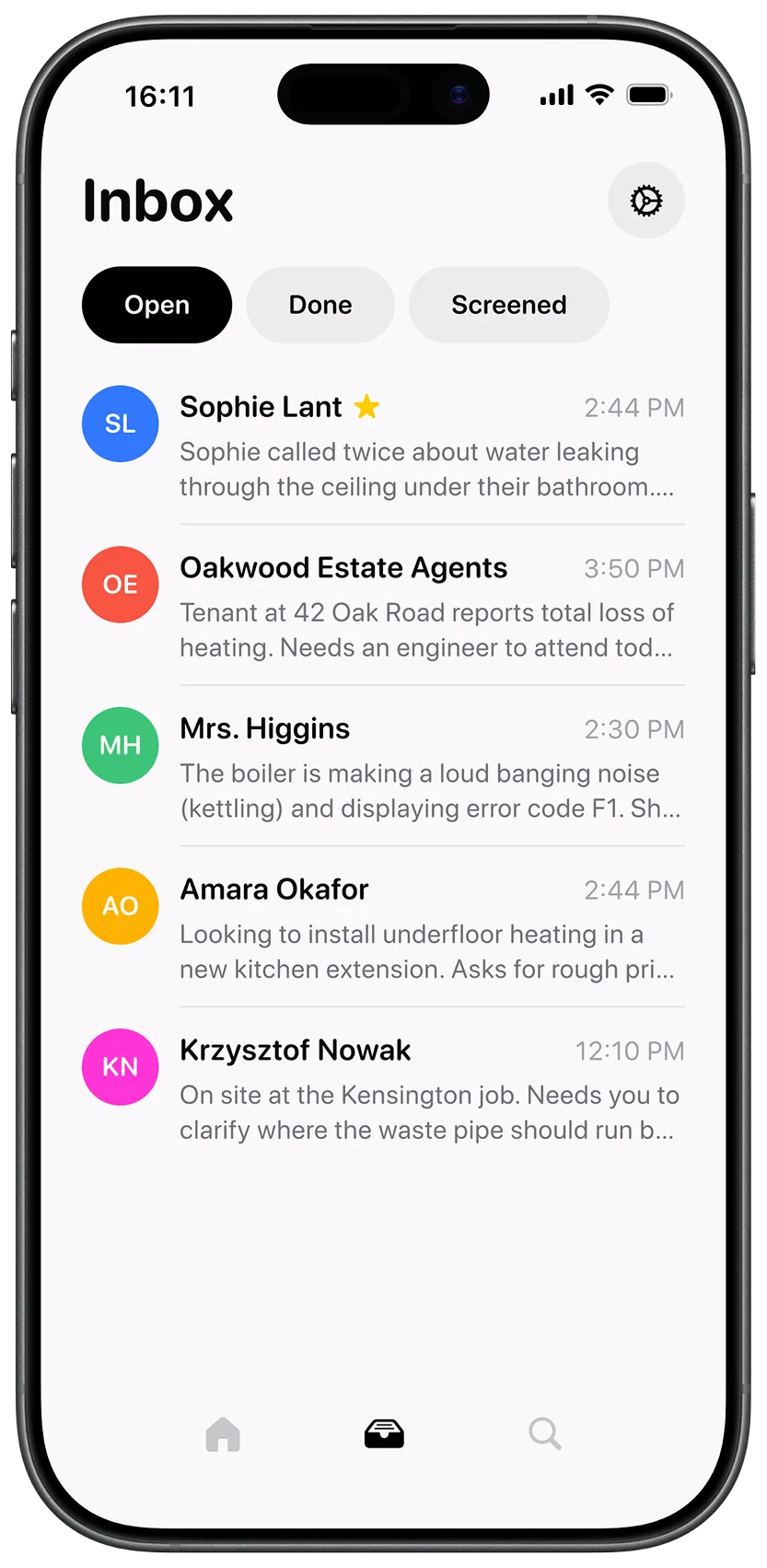
In his first month using Clara, 68 calls came in. Mark answered 21 of them himself. Clara handled the other 47. Of those 47, 16 turned into booked jobs — callers who gave their address, described the job, left a callback number, and confirmed they wanted someone to come out.
Mark’s previous assumption of “a few a week” turned out to be closer to twelve a week. The ones he’d been missing.
Why locksmiths are particularly exposed
The nature of the work explains it. A locksmith on an emergency callout can’t answer the phone while they’re physically working on a lock — especially on high-security mechanisms that require full attention. The drive time between jobs is the only real window to return calls, and by then the caller has usually already found someone else.
That’s not unique to locksmiths. It applies to electricians testing circuits, plumbers under sinks, decorators on scaffolding, and anyone whose hands are consistently occupied during the hours when most enquiries come in.
But locksmiths face a particular version of the problem because the work is emergency-driven. A person locked out of their home at 7pm isn’t going to wait for a callback. They’re going to work through every listing on Google until someone answers. The first locksmith who picks up gets the job. Everyone else gets a missed call in their log that they’ll never follow up, because they have no idea who called or why.
What the numbers look like when you add them up
Invoca’s research on small business call handling found that roughly one in four calls to small businesses goes unanswered, and fewer than 3% of callers leave a voicemail when nobody picks up. For emergency trades, the voicemail rate is almost certainly lower — these aren’t people with a non-urgent query who can wait. They’ll keep dialling.
The calculation for a locksmith isn’t complicated:
- Average emergency callout: £80–£150
- Average residential installation job: £200–£400
- Missed calls per week (based on Mark’s data): ~12
- Proportion that were genuine enquiries: roughly 70–80%
That puts the potential weekly loss at somewhere between £700 and £1,400 — before accounting for the larger commercial jobs that occasionally come through. Over a year, the invisible revenue loss runs well into five figures.
Most tradespeople haven’t done this calculation. Not because they’re bad at business, but because there’s no obvious prompt to do it. Missed revenue doesn’t show up anywhere. There’s no invoice marked “lost.” There’s no customer who called to say they went somewhere else. The calls just don’t appear again after they go unanswered.
Why being first matters more than being best
The evidence on response speed is consistent across service industries: the business that responds first captures a disproportionate share of work, regardless of price or reputation.
For emergency trades, this effect is even more pronounced. The caller isn’t comparing five locksmiths on quality. They’re calling them in order until someone answers. The first one who answers and sounds competent gets the job. The rest get nothing — not even a chance to quote.
BrightLocal’s research consistently shows that phone remains the primary contact method for local service businesses, with the majority of consumers preferring to call rather than fill in a contact form. That means the phone isn’t a backup channel — it’s the main one. And for trade businesses, what happens when someone calls is the most important moment in the customer acquisition process.
What Mark’s numbers show, concretely
Of the 16 jobs that came through from Clara-handled calls in that first month, Mark was already at work when 11 of them came in. Without Clara, those callers would have reached his voicemail. Based on his own estimate, roughly two of them might have left a message. The other nine would have been gone.
At his average callout rate of around £110, those nine recovered jobs represent about £990 in work he’d previously have lost without ever knowing it existed. In a single month.
The point isn’t to suggest every tradesperson will see identical numbers — the recovery rate depends heavily on how quickly you follow up, what kind of work you do, and how saturated your local market is. But the underlying dynamic is the same for every trade business that can’t always answer its phone: there is a gap between the calls that come in and the calls that get a response, and that gap has a cost.
Most businesses are just never shown what it is.