Electricians have a phone problem that’s worse than most trades, and it’s not because they’re less organised than plumbers or decorators. It’s because the nature of the work makes answering calls genuinely impractical for longer stretches of the day.
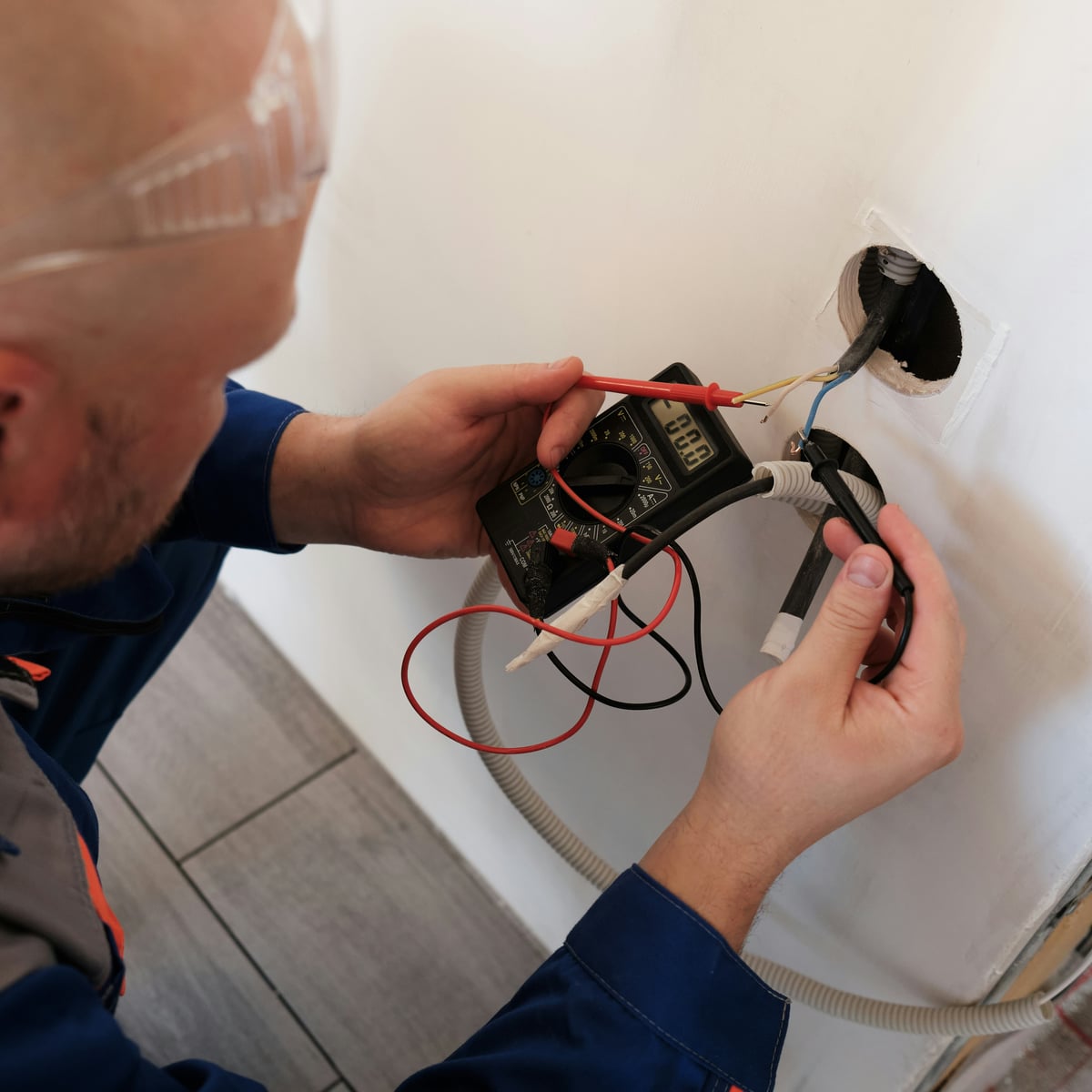
A plumber under a sink can step away for a minute to take a call. A decorator can put down a brush. An electrician working in a consumer unit, testing circuits, or pulling cable through a void with both hands occupied can’t pause the same way. The work requires sustained concentration, and in some cases the safety implications of breaking that concentration are serious enough that the phone stays in the pocket regardless of who’s calling.
The result is that electricians are effectively unreachable for larger portions of their working day than most other tradespeople, which means they miss more calls, which means they lose more work. And most of it is invisible.
Why do electricians lose more leads than other trades?
The first is the safety factor described above. Electricians work with live systems, at height, and in confined spaces more often than most trades. The phone doesn’t just go unanswered during these periods — it can’t be answered responsibly.
The second is timing. A lot of electrical enquiries come with urgency attached. A tripped circuit that won’t reset. A socket that sparked. A new appliance sitting in its box because the kitchen doesn’t have the right supply. These callers want someone now, and “now” means whoever answers first. If the electrician they called is on a job, they’ll ring the next one.
The third is certification deadlines. Part P work, EICRs, landlord safety certificates — these have hard deadlines. The letting agent needs the report by Friday. The homeowner needs sign-off before the building inspector comes. When those callers can’t reach an electrician, they don’t wait patiently. The deadline doesn’t move, so they find someone who’s available.
What does a missed call actually cost an electrician?
Here’s a calculation that most self-employed electricians haven’t done, because the inputs are largely invisible.
Invoca’s research puts the average small business missed call rate at about a quarter, with less than 3% of those callers leaving a voicemail. For an electrician who misses three calls a day — a reasonable estimate on a busy day when they’re on site for most of it — and gets a voicemail from maybe one every couple of weeks, the vast majority of missed enquiries simply vanish.
If even one of those daily missed calls was a genuine job worth £200-300 — a consumer unit upgrade, a rewire quote, an EICR — that’s potentially £1,000-1,500 per week in invisible lost revenue. Over a year, the number gets uncomfortable.
The work doesn’t show up as lost because it was never won. There’s no record of it. No declined quotes, no cancelled bookings, no unhappy customers. Just people who called, didn’t get through, and tried the next electrician on their list.
Why does speed of response decide who gets the job?
The data on this is consistent across every service industry we’ve looked at: the first business to respond captures a disproportionate share of the work. Not the cheapest, not the most qualified, not the one with the best Google reviews. The first one who picks up the phone.
For smaller jobs especially — the extra sockets, the outdoor lights, the fault-finding calls — nobody runs a comparison process. They want it sorted. The electrician who answers the phone, asks sensible questions, and sounds like they can do the job gets it. The one who calls back three hours later is already competing against a decision that’s been made.
Whether the solution is a system that answers calls automatically, a strict thirty-minute callback rule, or a partner who handles the phone while you’re on site — the method matters less than the recognition that every unanswered call has a real cost attached to it, even when you never see the bill.